




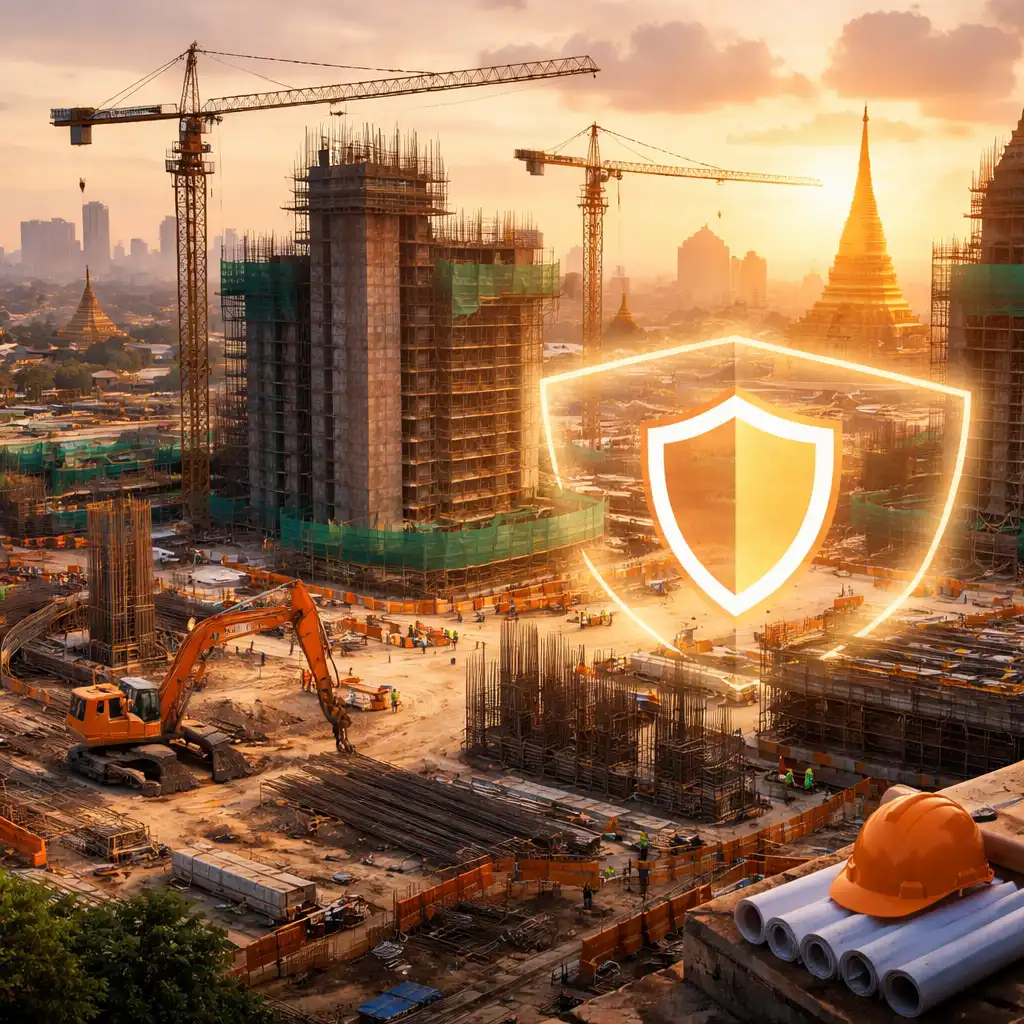
Third-Party Liability Risks in Thailand’s Construction Industry
Third-Party Liability Risks in Thailand’s Construction Industry
Third-Party Liability Risks in Thailand’s Construction Industry are rising as urban development accelerates across Bangkok, Chiang Mai, and other dense city centres. Construction sites now sit closer to occupied buildings, public roads, and small businesses, increasing the likelihood that accidents will affect people and property beyond the site boundary. Many firms assume their construction project insurance will automatically respond, only to discover painful gaps after an incident.
Why third-party liability risks are escalating
Thailand’s construction boom has produced taller structures on tighter footprints, with work often carried out above busy streets and market areas. In this environment, even minor errors can lead to significant third-party construction liability claims. Falling tools, unsecured materials, or poorly planned crane operations can quickly turn into legal disputes, work stoppages, and reputational damage. Smaller contractors are particularly vulnerable, as a single major claim can overwhelm limited cash reserves.
Common causes and warning signs on Thai building sites
Typical third-party incidents stem from predictable patterns: inadequate hoarding, limited pedestrian segregation, and rushed temporary works. Neighbouring shophouses may suffer cracks from piling activities, while dust and vibration disrupt nearby restaurants or clinics. Warning signs include frequent near-misses involving passersby, recurring complaints from residents, and unclear procedures for site vehicle movements. When safety briefings are irregular or method statements missing, the legal liability for construction works can escalate rapidly.
The role and limits of CAR insurance
Many developers rely on a contractors all risk policy to absorb the financial shock of accidents involving third parties. While these policies commonly bundle material damage with liability coverage for contractors, they are not a substitute for robust site controls. Misunderstandings often arise over deductibles, territorial limits, or exclusions for gradual damage such as subsidence or long-term vibration. Some project teams wrongly assume subcontractors are fully covered under a master policy, only to encounter disputes after a serious claim.
- Confusion over which party holds primary builder liability insurance Thailand for each work package
- No clear documentation of site accident liability cover for subcontractors and specialist trades
- Failure to address construction defect insurance options in contracts and policy reviews
- Overlooking weather-related damage insurance despite monsoon exposure and open structures
- Limited risk management for builders in high-traffic or heritage neighbourhoods
These gaps can leave both investors and contractors exposed when incidents trigger compensation claims or regulatory scrutiny. Understanding how project owner liability protection interacts with site-level controls is essential, especially on complex projects with multiple tiers of subcontracting. Reviewing site arrangements, policy wordings, and claims history can highlight weaknesses long before they result in costly disputes. If your current builder insurance program has not been tested against real Thai case studies, now may be the time to reassess.
Construction leaders should treat third-party liability as a core operational risk, not just an insurance line item. Assess whether your current site practices, documentation, and construction project insurance genuinely reflect the exposure around each project. If you are unsure who would respond to a major claim tomorrow, speak with a specialist adviser about strengthening your coverage and controls. Taking expert guidance today can help prevent a single accident from derailing your next major development.
